Americans typically begin their careers in their early twenties and continue working until their mid-to-late sixties, or later. Your ideal retirement date is an individualized choice, and it can be a big adjustment when regular paychecks cease regardless of how much has been stashed away in savings. Planning for retirement and managing income sources efficiently are crucial for maintaining financial stability during your later years. Creating a customized, tax-efficient income plan is a big reason you work with an experienced and knowledgeable advisor as it needs to be appropriate for YOU and your circumstances in addition to being fluid as you get deeper into retirement. Here are some basis tips to keep in mind and consider when putting together a retirement income plan.
Be Aware of the Tax Ramifications of your Retirement Income
Your retirement income plan should not only cover your expenses but should also be as tax efficient as possible. The goal is to maximize income while minimizing the tax burden.
Utilizing Current Sources of Income
Earnings from part-time work, social security, pension payments, and rental income can all help to offset spending needs in retirement and, in some cases, may be enough to fully fund your retirement lifestyle on a consistent basis. Using these funds for day-to-day expenses can help minimize the need for tapping into your investments thus allowing your nest egg to continue to grow.
Interest and Dividends from Investment Portfolios
Interest and dividends held in an after-tax account are generally taxed – either as ordinary income or at your capital gains rate if the dividends come from stocks. These are taxable whether they are withdrawn or reinvested, so it often makes sense to use these to supplement any of the income sources mentioned above. Using this “income only” approach to your non-qualified accounts still allows them to stay invested and grow in a diversified portfolio.
Tap Into Your Non-Qualified (After-Tax) Accounts
Once all the aforementioned income sources are exhausted, tapping into your taxable accounts normally makes the most sense. These are accounts for which you pay taxes annually on the dividends and/or interest they generate as well as capital gains from security sales.
Required Minimum Distributions (RMDs)
Once you reach a certain age (either 73 or 75 currently) you must withdraw a certain percentage from your tax deferred retirement accounts, per IRS regulations (all except for Roth IRAs). These withdrawals are subject to ordinary income tax and may be subject to state tax as well, depending on where you live. This is often the primary source of retirement “income” for retirees as it’s very common for the majority of one’s liquid assets to be socked away in their former company’s retirement plan or a subsequent IRA.
It’s normally recommended that a certain percentage of this RMD is withheld for Federal taxes. This amount should be close to the account owner’s effective tax rate which can change from year to year. You can work with your advisor and/or your tax preparer to determine what this should be.
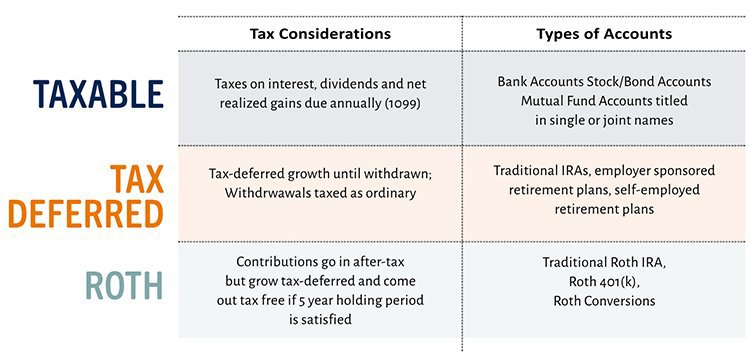
Remember, everyone’s financial situation is unique, and there is no one-size-fits-all approach to retirement planning. This traditional withdrawal sequence might need to be altered or customized for you, depending on how much you have saved in each type of account and the sum of your other retirement income sources. Before any decisions are made, it is imperative that you collaborate with your advisor at Fragasso and your tax professional to customize a strategy that aligns with your specific income needs, retirement goals, and tax position. This collaboration can have a meaningful impact on the longevity of assets and a retirement income plan’s success.