
Earlier this year, the One Big Beautiful Bill Act was signed into law. This was a major piece of legislation with wide-ranging tax and spending changes. One provision, called the Enhanced Senior Deduction, is designed to provide meaningful tax relief to taxpayers age 65 and older.
What Is the Enhanced Senior Deduction?
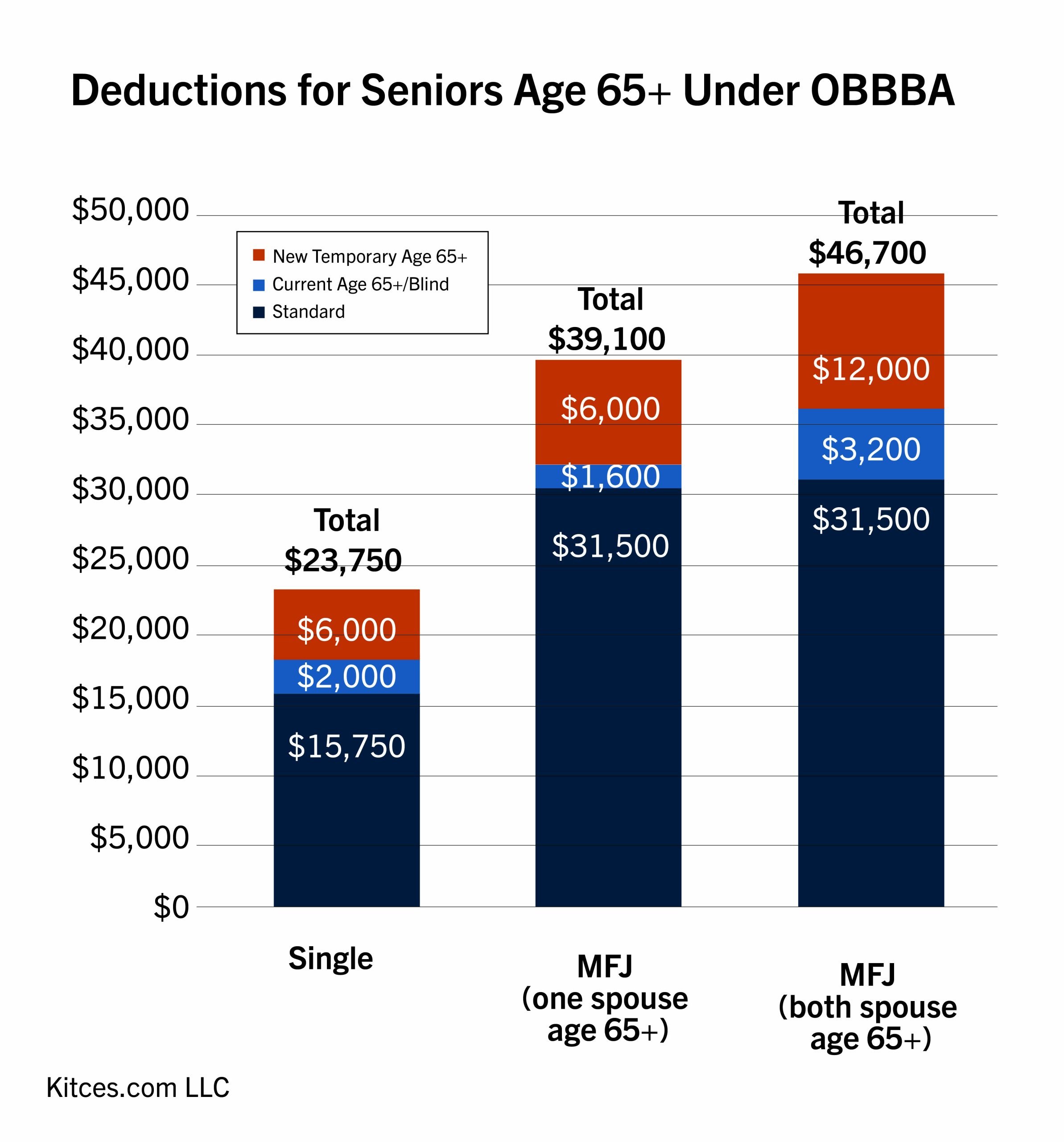
Beginning with the 2025 tax year and lasting through 2028, taxpayers aged 65 or older may qualify for an additional deduction of up to $6,000 per person. Married couples in which both spouses are at least 65 can receive up to $12,000.
This is in addition to the standard deduction. For perspective, a single filer aged 65 or older could see their total deduction rise to as much as $23,750 in 2025 — more than $7,000 higher than in 2024. Married couples filing jointly could see a deduction of up to $46,700, over $14,000 more than the prior year. Depending on income and filing status, this could translate into thousands of dollars in annual tax savings.
A Simple Example
Consider a married couple, both age 67, filing jointly. In 2024, their standard deduction was approximately $32,000. Under the new law, their 2025 deduction could jump to $46,700 — an increase of over $14,000.
If the couple falls in the 22% tax bracket, this larger deduction could lower their federal tax bill by more than $3,000. That’s real money that can be redirected toward healthcare expenses, travel, or simply preserving more of their retirement savings.
Income Limits and Phaseouts
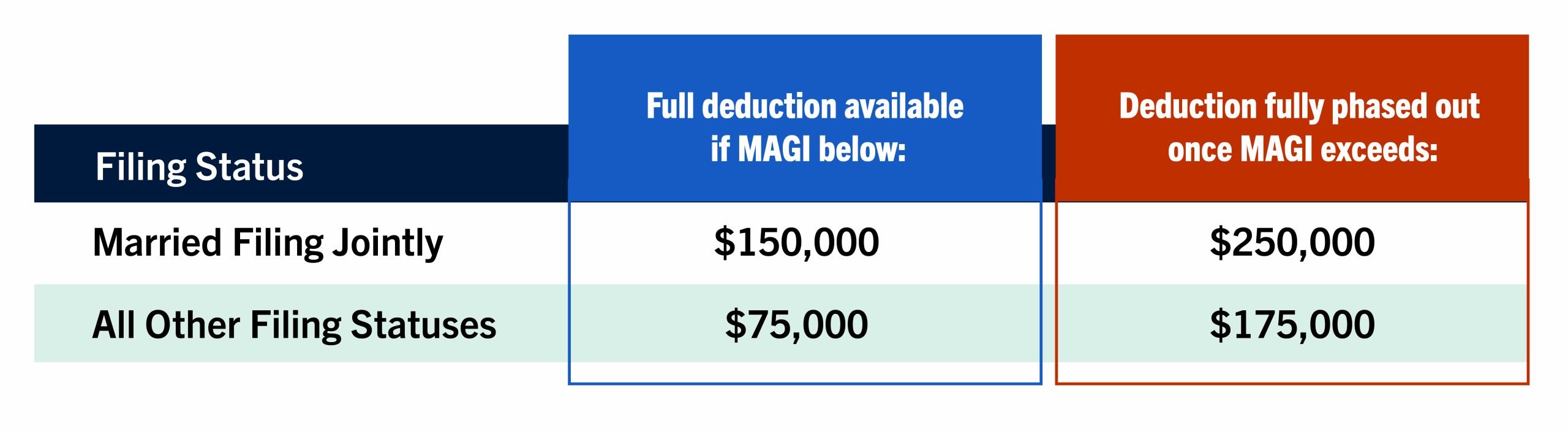
The enhanced deduction is subject to income phaseouts. For married couples filing jointly, the benefit begins to phase out once modified adjusted gross income exceeds $150,000 and disappears entirely at $250,000. For single filers and heads of household, the phaseout range is $75,000 to $175,000. Understanding where your income falls within these thresholds is critical for accurate planning.
Modeling the Impact
To illustrate the potential benefit, consider a hypothetical couple, both over age 65, with $131,750 in adjusted gross income. In 2024, after the standard deduction, their federal tax bill was roughly $11,985. Under the new 2025 rules, their deductions increase by over $12,000, reducing taxable income to about $85,050. Their tax bill falls to around $9,729, saving more than $2,200 and lowering their marginal tax bracket from 22% to 12%.
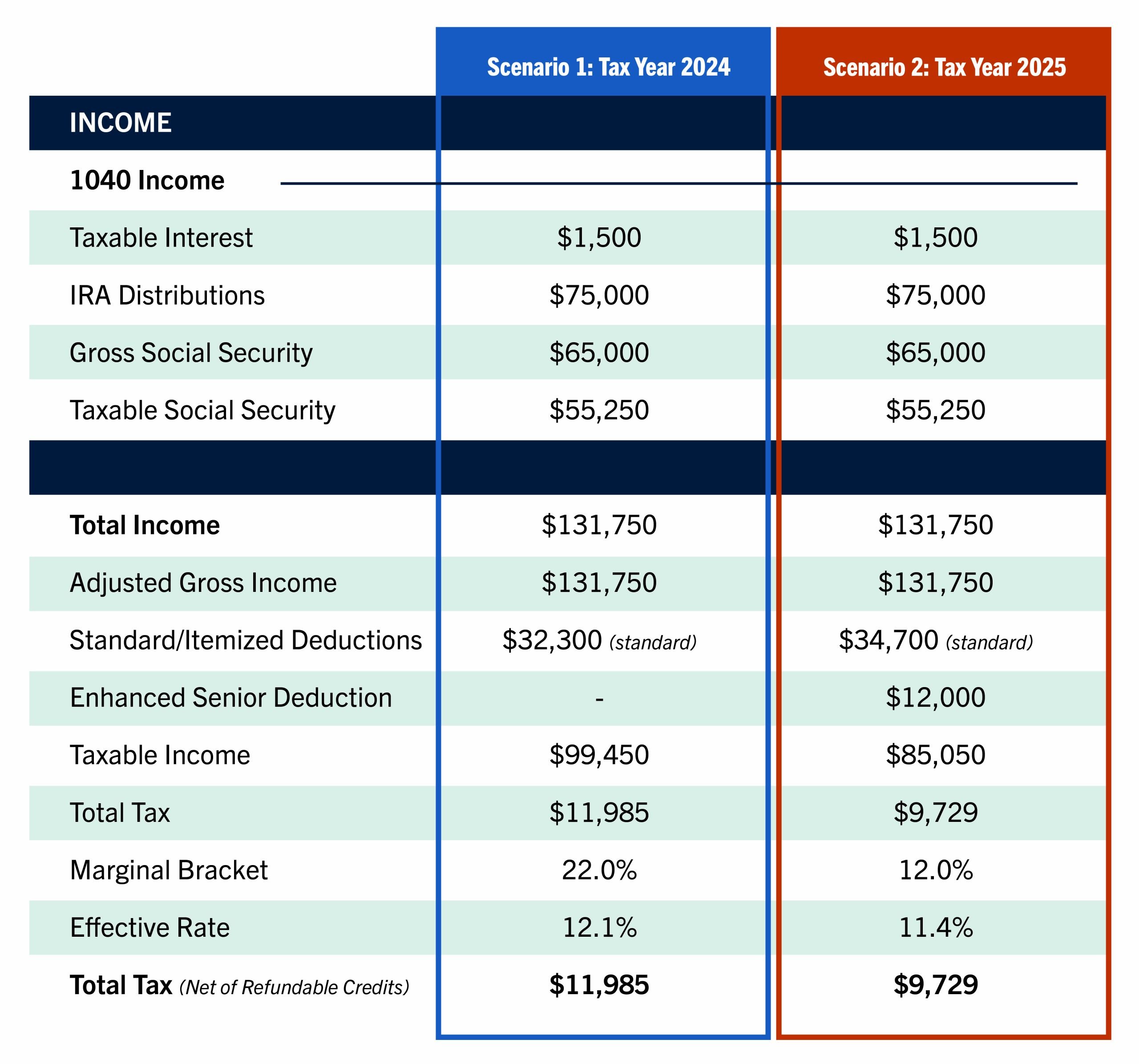
This kind of shift offers retirees greater flexibility for cash flow management, Roth conversions, and capital gain planning.
The Bottom Line
For many retirees, this new deduction represents a welcome opportunity to reduce taxes and stretch retirement dollars further. However, the actual benefit depends on individual income levels, filing status, and overall tax strategy.
At Fragasso Financial Advisors, we work closely with clients and their accountants to model how legislative changes like this can affect their long-term financial plan. Strategic coordination between your financial advisor and tax professional helps to ensure that you make informed decisions to optimize your retirement income.