Investing in the Age of Artificial Intelligence: Balancing Opportunity and Uncertainty in a Rapidly Evolving Landscape

Jim Sinegal

September 4, 2026

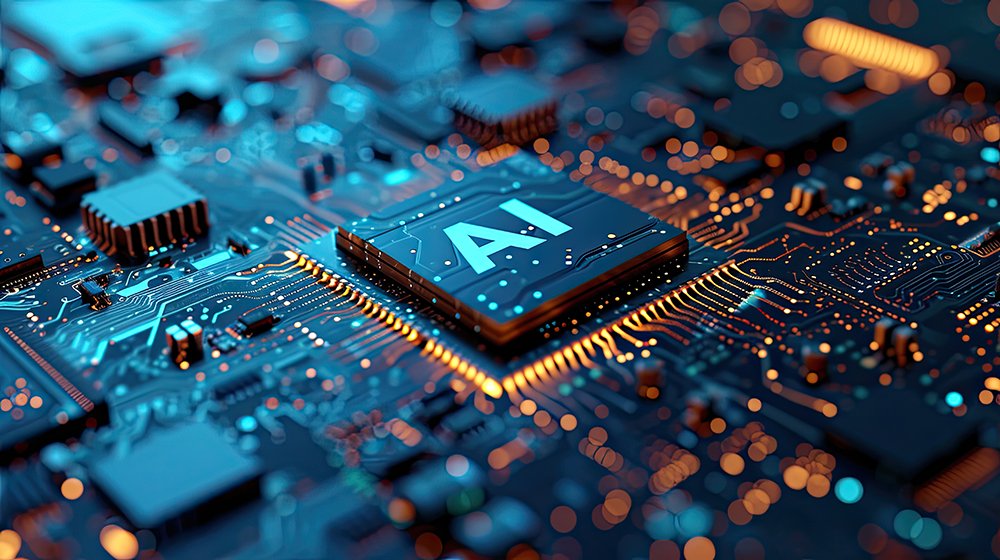
computer chips with AI written on the center chip

Artificial intelligence continues to be among the most prominent and debated topics in the investment world. The scale of capital investment and the pace of technological advancement are likely to bring about the largest economic and societal changes since the Industrial Revolution. This has created both enormous opportunities and significant risks in investment portfolios, as new companies and business models emerge and thrive, while others struggle to adapt or become obsolete.

Artificial intelligence encompasses a wide range of computer functions that replicate human abilities. IBM’s Deep Blue software, for instance, defeated chess grandmaster Garry Kasparov for the first time in 1997—a milestone in computing capability. The computer vision and decision-making software that allows for autonomous driving is a more contemporary example. Today, AI extends beyond single-purpose applications to more complex and varied tasks, including the language processing that enables AI to gather and synthesize information, and the neural networks used for creative tasks like generating videos.

As the hardware and software that powers AI continues to improve, many believe that computer processing power will soon match or exceed the generalized reasoning abilities of the human brain.


Accredited By:

Jim Sinegal
Senior Investment Analyst

As a senior investment analyst, Jim focuses on researching opportunities in individual stocks and alternative investments for Fragasso’s clients. He also contributes to overall portfolio positioning and asset allocation decisions. Jim is a member of the Fragasso Investment Committee.1 Prior to joining Fragasso, Jim spent over a decade in Chicago as a senior equity analyst […]

Read Full Bio

This article has been reviewed for accuracy by Fragasso's leadership team and accredited by Jim Sinegal to help ensure the information reflects current financial planning and wealth management principles.

The Cost of Progress

Progress does not come cheap. At present, AI requires enormous amounts of data storage and processing power, and these requirements grow exponentially with the complexity of the task. For perspective, one human brain contains about 100 billion individual neurons that process electrical signals, and the complex patterns of connections between these neurons number into the quadrillions! These figures help explain why billions of dollars are being invested as companies attempt to replicate these capabilities with semiconductors.

Energy and infrastructure availability is currently as important as progress in hardware and software.

AI is helping individual workers and companies to become far more productive. In investment management, computers can gather and process vast amounts of information, including global macroeconomic developments, product news, company filings, and social media posts far beyond the capacity of even the most relentless analyst. AI can also find and test thousands of data relationships that can move stocks over time.

Similarly, AI is becoming a powerful analytical partner in the legal field, expanding the scale and speed of research and surfacing insights that would be difficult for humans to uncover.

Winners, Losers, and Uncertainty

Technological advances, however, are always a double-edged sword. As computers become more efficient and capable, some jobs and companies will become obsolete. Rising unemployment is a major concern as AI begins to outperform human counterparts across a wide range of jobs.

Software stocks, for example, sold off to begin 2026 as investors feared that AI’s ability to code will not only reduce demand for computer programmers, but eliminate the need for software companies altogether. Looking even further into the future, some experts believe that AI poses an existential risk to humanity. Clearly, the impact will not be positive across the board.

From a portfolio management perspective, this has created a tremendous amount of uncertainty across a wide variety of asset classes. The ideal investment strategy would need to perfectly predict the future in several dimensions:

  • The pace of technological development
  • The distribution of economic profits, if any, across the AI value chain
  • The evolution of company-specific competitive advantage
  • The disruption of incumbent companies and industries
  • AI’s impact on employment, inflation, and other macroeconomic variables

History shows that forecasting the effects of rapid technological change is far more difficult than it appears in hindsight. The ultimate winners often seem obvious after the fact, while at the time the landscape is crowded with credible competitors and established incumbents. For every transformative success, many competitors fail while industry incumbents struggle to adapt or are displaced entirely. And progress is not always linear—growing industries often experience multiple changes in leadership and boom/bust cycles on their way to maturity.

Clarity Through Discipline

Rather than attempting to predict a single outcome, a thoughtfully constructed portfolio may seek to participate in the long-term beneficiaries of AI-driven growth while avoiding excessive reliance on any one narrative. Periods of innovation can produce unusually wide gaps between winners and losers, making disciplined risk management essential.

Our role is not to gamble on an uncertain future. Rather, we strive to maintain meaningful exposure to potential leaders while seeking to manage downside risk, balancing the opportunity for growth with the need to protect capital.

In periods of rapid innovation, clarity may come not from forecasting every outcome but from maintaining a disciplined approach in the face of uncertainty.