

Of the over $400 billion dollars that were donated to charity in the last several years, over 60% of those gifts came from individuals1. It’s important to give at a financial level you are comfortable with taking into consideration what makes sense for your family. If you are making significant gifts to charity, you should consider unique gifting options outside of writing a check to your charity of choice.
Charitable gifts can be immediate, outright gifts as well as deferred gifts.
IMMEDIATE AND OUTRIGHT GIFTING:
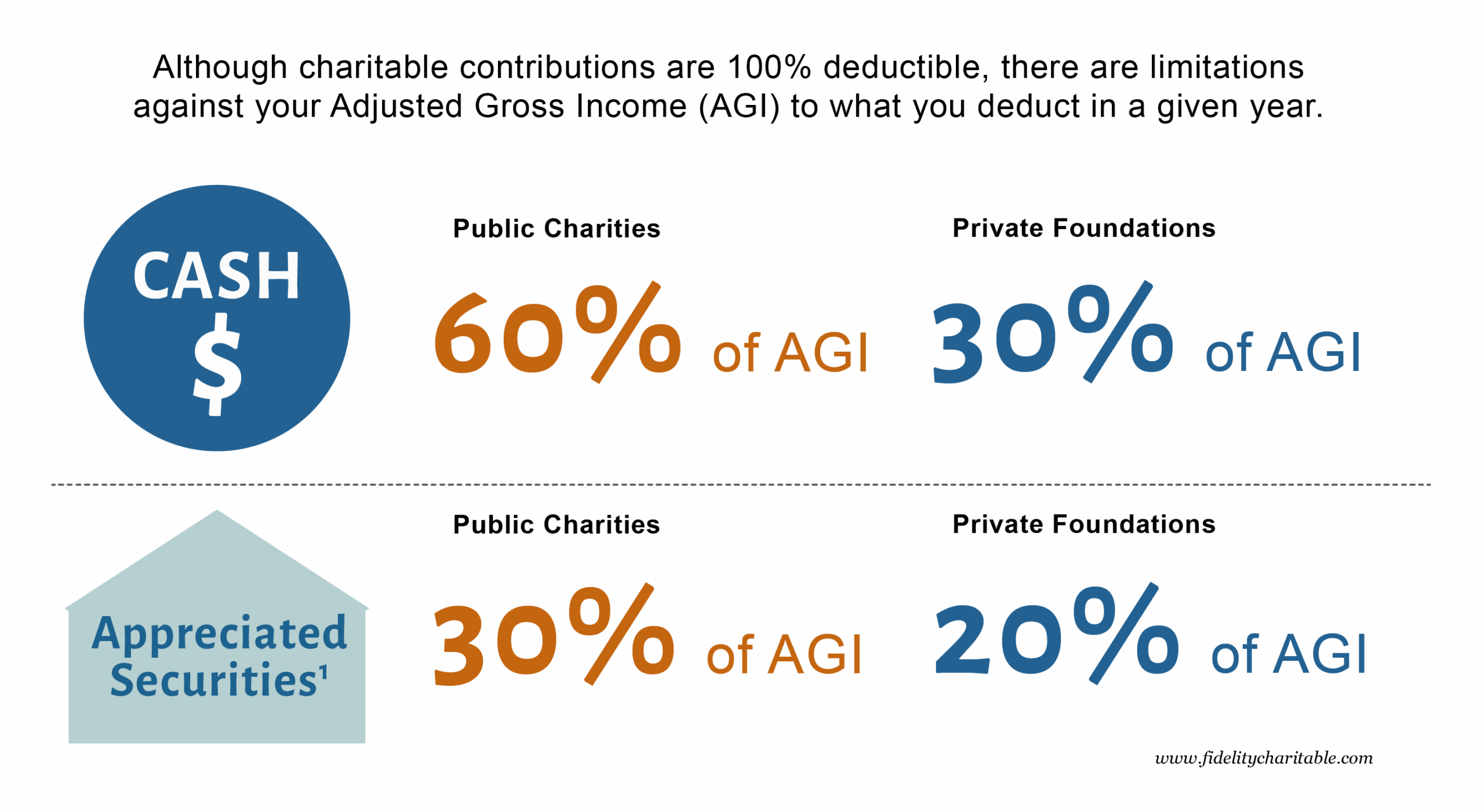
This would be a donation to charity in which you immediately relinquish your control over the funds. Examples of outright gifts may be in the form of cash, securities, restricted stock, real estate, or personal property. The tax deduction depends on the type of charity being donated to and what is donated.
DONATING APPRECIATED SECURITIES
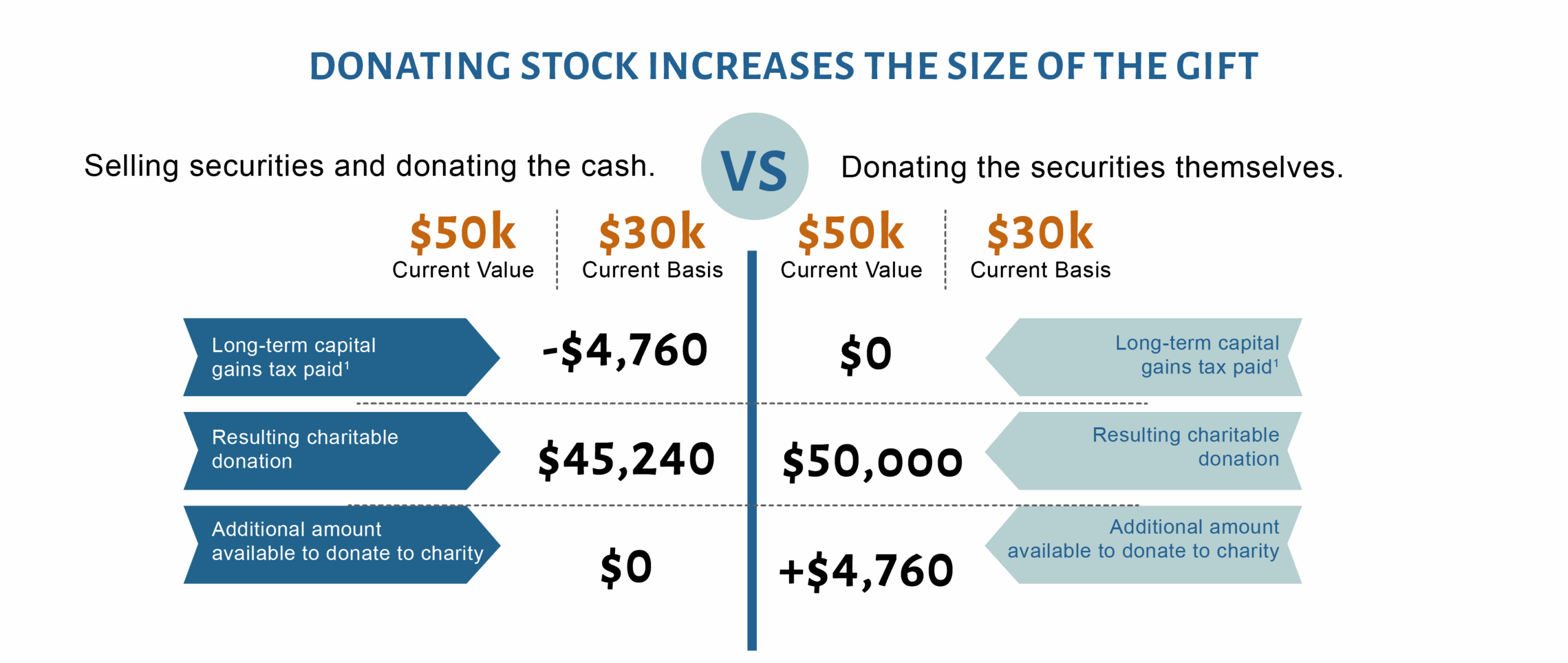
If you have a personal or joint account that holds securities with low-cost basis, it is worth considering donating those securities directly to charity. This can be done at all gifting levels. By doing this, you will achieve multiple goals. When you give the stock directly to charity, you are not selling it but transferring it to your charity of choice. This will prevent you from realizing the capital gain and paying taxes. In addition, if you itemize your taxes, you can take a tax deduction on the value of the stock at the time of the gift. For 2024 you can itemize deductions above $14,600 for single filers, $29,200 for married filing jointly, and $21,900 for head of household. (There is also an additional standard deduction for being age 65 or older or blind).
QUALIFIED CHARITABLE DONATIONS (QCD)
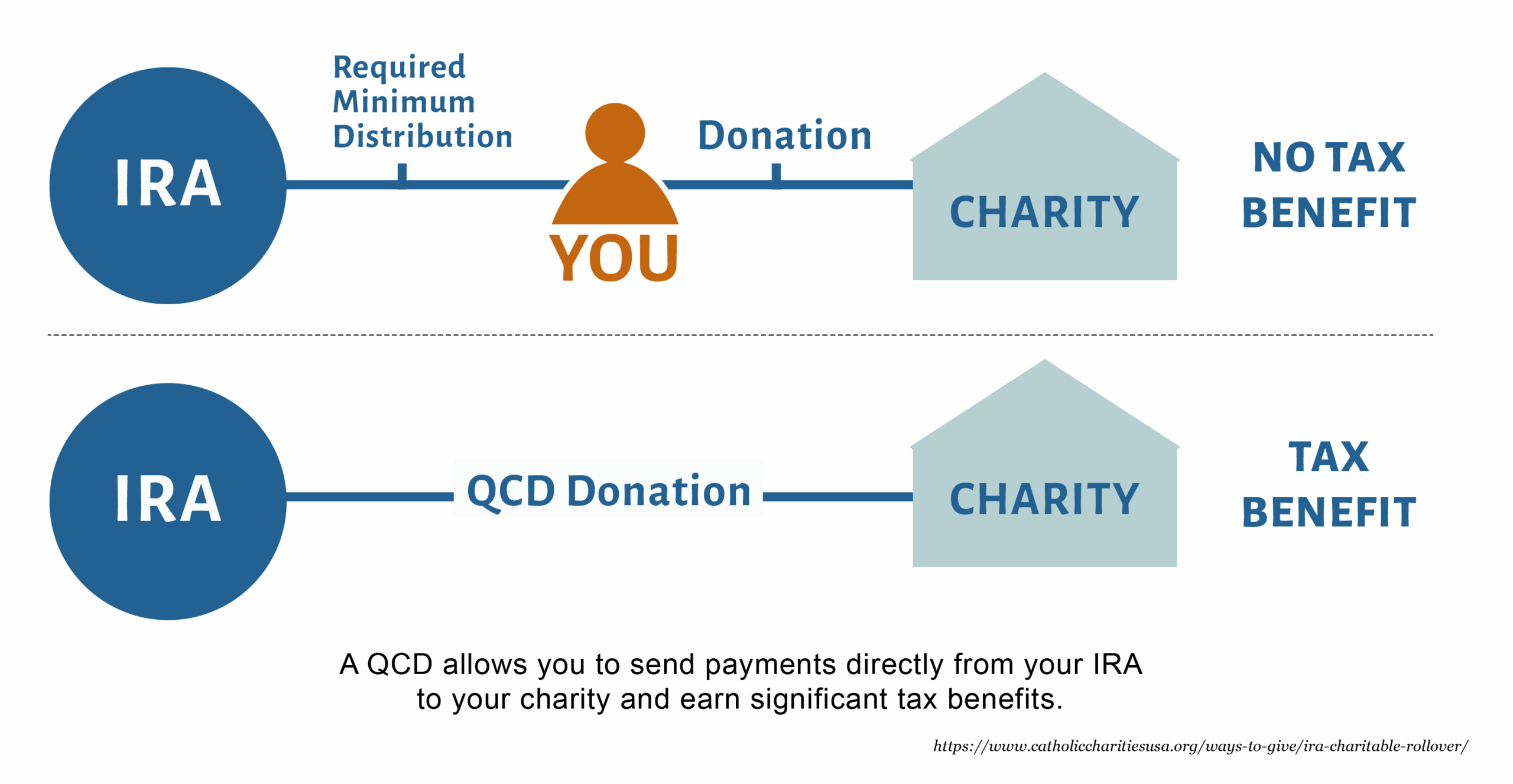
If you are over 70 and 1/2, you are eligible to donate directly from your IRA to charity up to $100,000 per year. This will go towards satisfying your required minimum distribution (if you are of age), and it keeps the distribution from flowing onto your tax return as income. Keeping your taxable income lower may reduce the impact to certain tax credits and deductions, including social security and Medicare.
DONOR ADVISED FUNDS
Donor advised funds allow you to manage your charitable gifts over time. When you contribute cash, securities, or other assets to a donor-advised fund at a public charity you are generally eligible to take an immediate tax deduction. Then those funds can be invested for tax-free growth, and you can recommend grants to any eligible IRS-qualified public charity over time.
BUNCHING
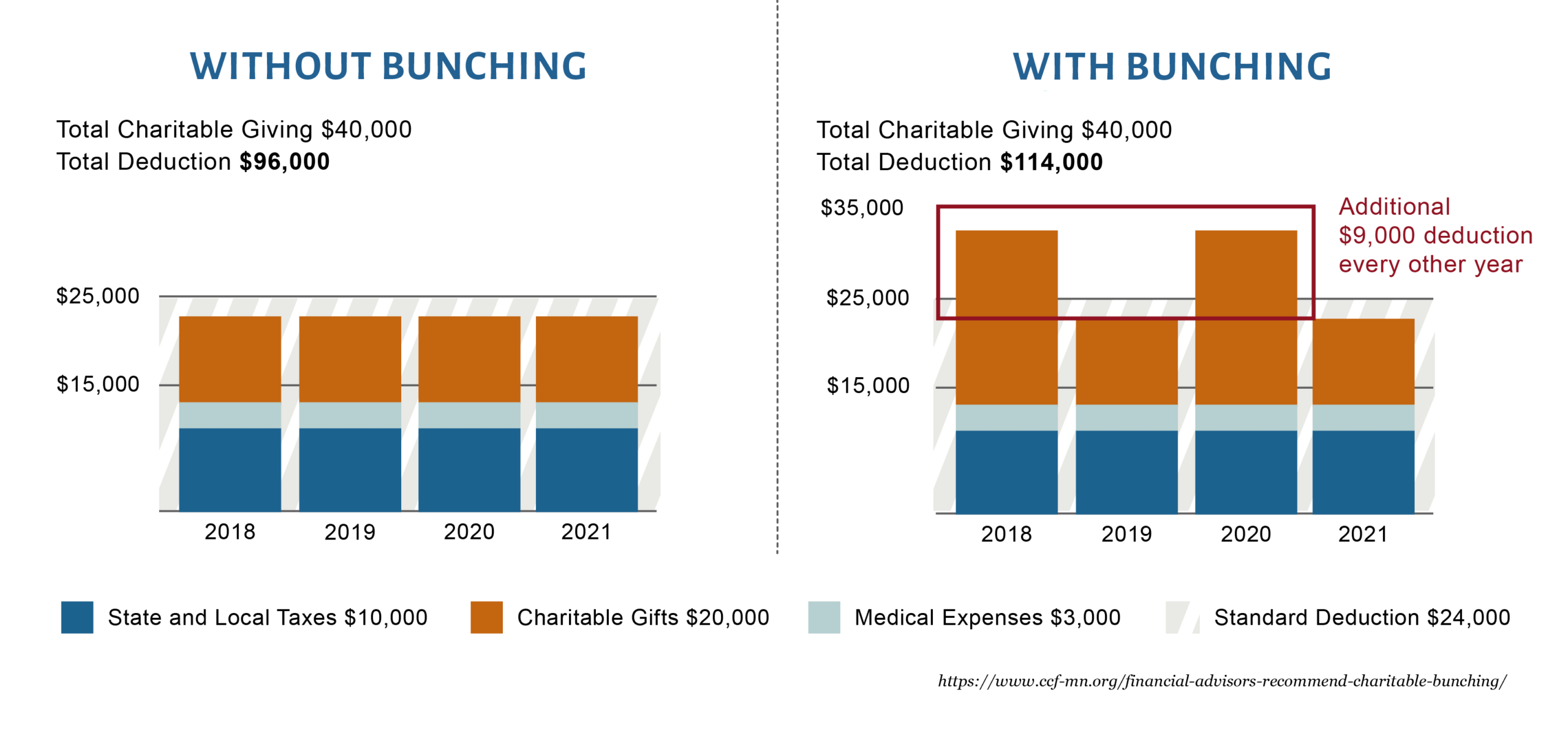
This strategy involves giving multiple years’ worth of gifts in one calendar year. By bunching your charitable gifts, you have a greater likelihood of utilizing itemized deductions on your tax return, so you can take a tax deduction for the gift. For example, you could itemize deductions on your 2024 tax return and take the standard deduction for 2025. This strategy may produce a larger total deduction over two years than two years of standard deductions. Bunching into a Donor Advised Fund allows the immediate tax benefit and then the ability to donate to charities over time.
DEFERRED GIFTING:
By utilizing the creation of charitable trust, you as the grantor (giver) can retain some financial benefits to the original gift. This type of trust is called a Charitable Remainder Trust (CRT).
- Charitable Remainder Trusts are an irrevocable trust, and therefore, gifts made to the trust cannot be reversed. While there are many benefits for utilizing a CRT, the most significant benefit is that you as the donor or your chosen beneficiaries will receive an income stream from the trust for a period not to exceed twenty years. Once the period of the trust has expired, the assets remaining in the trust are transferred outright to the name charity(s).
- Gifts made into CRTs are partially tax deductible based on type of trust, income payments, term of trust, and interest rates. Since you or the beneficiary is still receiving a benefit from the trust via an income stream, the full value of the gift cannot be tax deductible.
- Gifts of cash, assets, and other property are allowed into the trust. However, gifting appreciated securities can be especially advantageous as the trust can sell the asset, incur no capital gains, and realize the proceeds into a balanced portfolio.
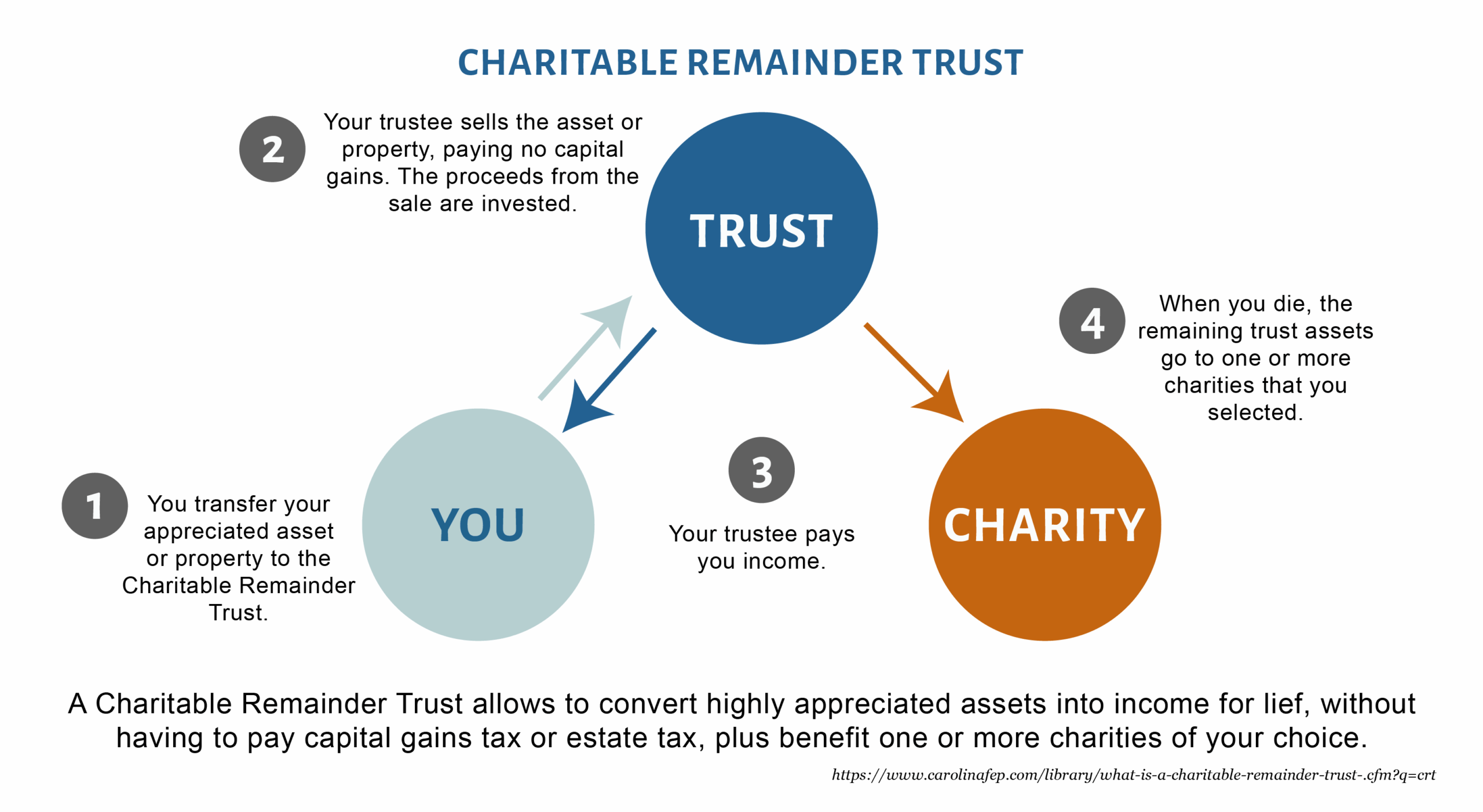
- Income to yourself or beneficiaries can be received in one of two ways based on the type of CRT you create. Income streams from the trust are taxable.
-
- Charitable Remainder Unit Trust (CRUT) – Distributes a fixed percentage of the account value to the beneficiaries each year.
- Charitable Remainder Annuity Trust (CRAT) – Distributes a fixed annuity payment to the beneficiaries each year.
- If you are the donor to the trust and do not need the income stream, you can name other beneficiaries to receive the money such as your children and grandchildren.
OTHER CONSIDERATIONS FOR GIFTING:
Creating a trust will require you to work with an attorney to draft the documents. The fixed cost is a consideration and may not be appropriate for smaller gifts.
Work with your attorney to allow for flexibility as to who is the named charity of the trust. Your charitable intentions can change over time. You may want to add, remove, or broaden the beneficiaries of your trust. Your attorney can help ensure the trust has the written in flexibility to allow you, as the grantor, to make changes to the charity(s) of choice.
If you are considering making a significant charitable donation, the team at Fragasso Financial Advisors is here to help guide you towards the best strategy considering your charitable intent and family circumstances. Planning early is always a good way to ensure your donation is complete by year end.
Source:
- https://givingusa.org/giving-usa-limited-data-tableau-visualization/
The information provided is not intended as tax or legal advice, and it may not be relied on for the purpose of avoiding any federal tax penalties. You are encouraged to seek tax or legal advice from an independent professional advisor.