
Recent developments in the Middle East have understandably raised concerns among investors. Though markets currently remain near all-time highs, geopolitical conflict often results in considerable uncertainty and market volatility. Rather than react to a constant flow of changing headlines, we focus on building client portfolios that are prepared to weather a wide range of economic outcomes over time.
Periods of heightened global tension are not all bad for well-constructed portfolios. Certain sectors or asset classes, including energy companies and defense contractors, have often outperformed during wartime. As technology becomes more important to the military, companies that produce unmanned aircraft and work with artificial intelligence have grown in importance. Government bonds and other investments perceived as safe havens also do well in uncertain times. Adequate exposure to these areas can help offset volatility in other parts of the market. Finally, inflation-linked investments and foreign companies both buffer the impact of heightened wartime spending and rising energy prices.
While the human and economic consequences of conflict are significant, history suggests that the long-term impact on diversified investment portfolios is often far smaller than many expect. Markets tend to recover quickly once short-term uncertainty is resolved. In fact, the S&P 500’s average one-year return following major geopolitical events since the Korean War has been positive. In recent years, the conflicts between Ukraine and Russia, Israel and Palestine, and worries over the relationship between China and Taiwan have done little to stem the market’s upward march.
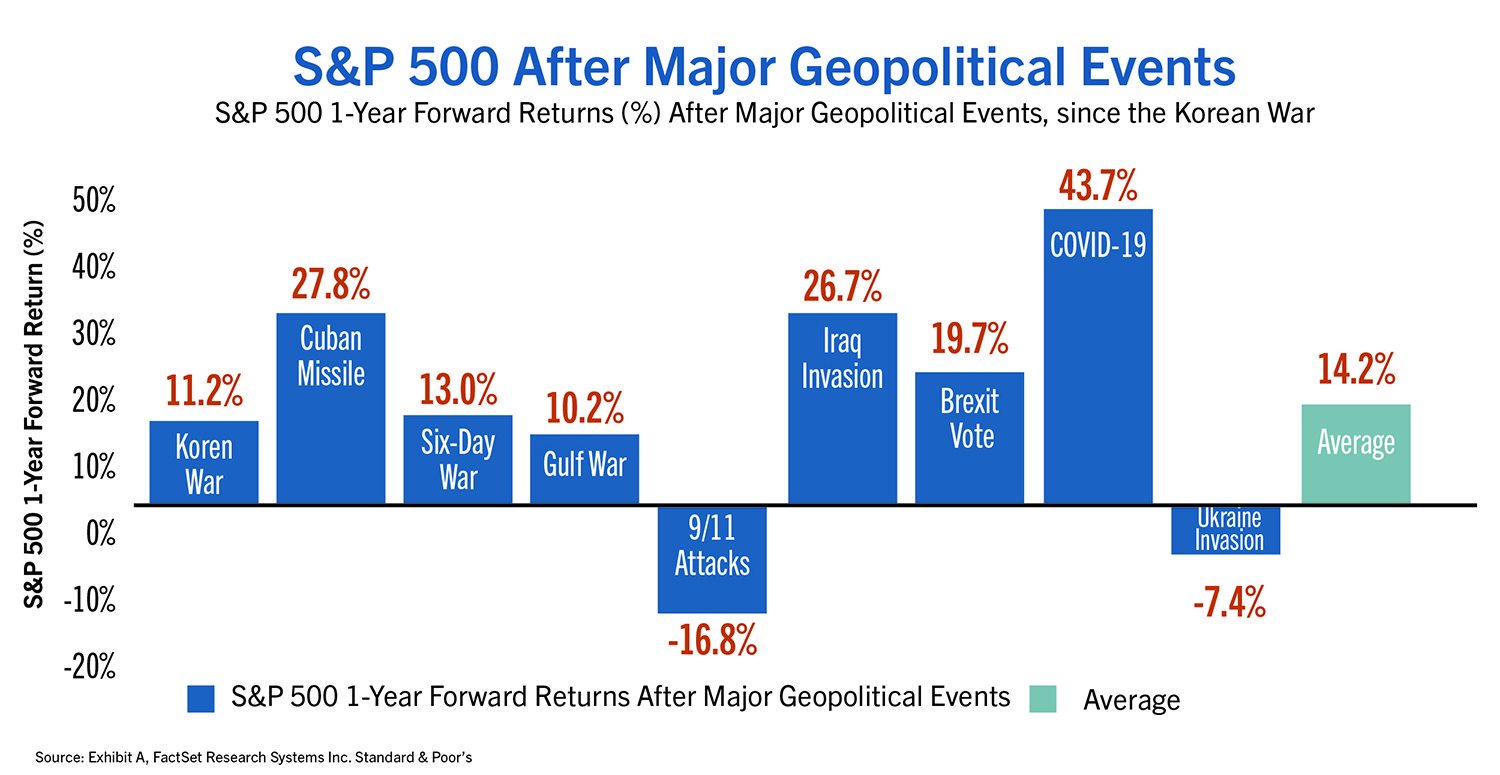
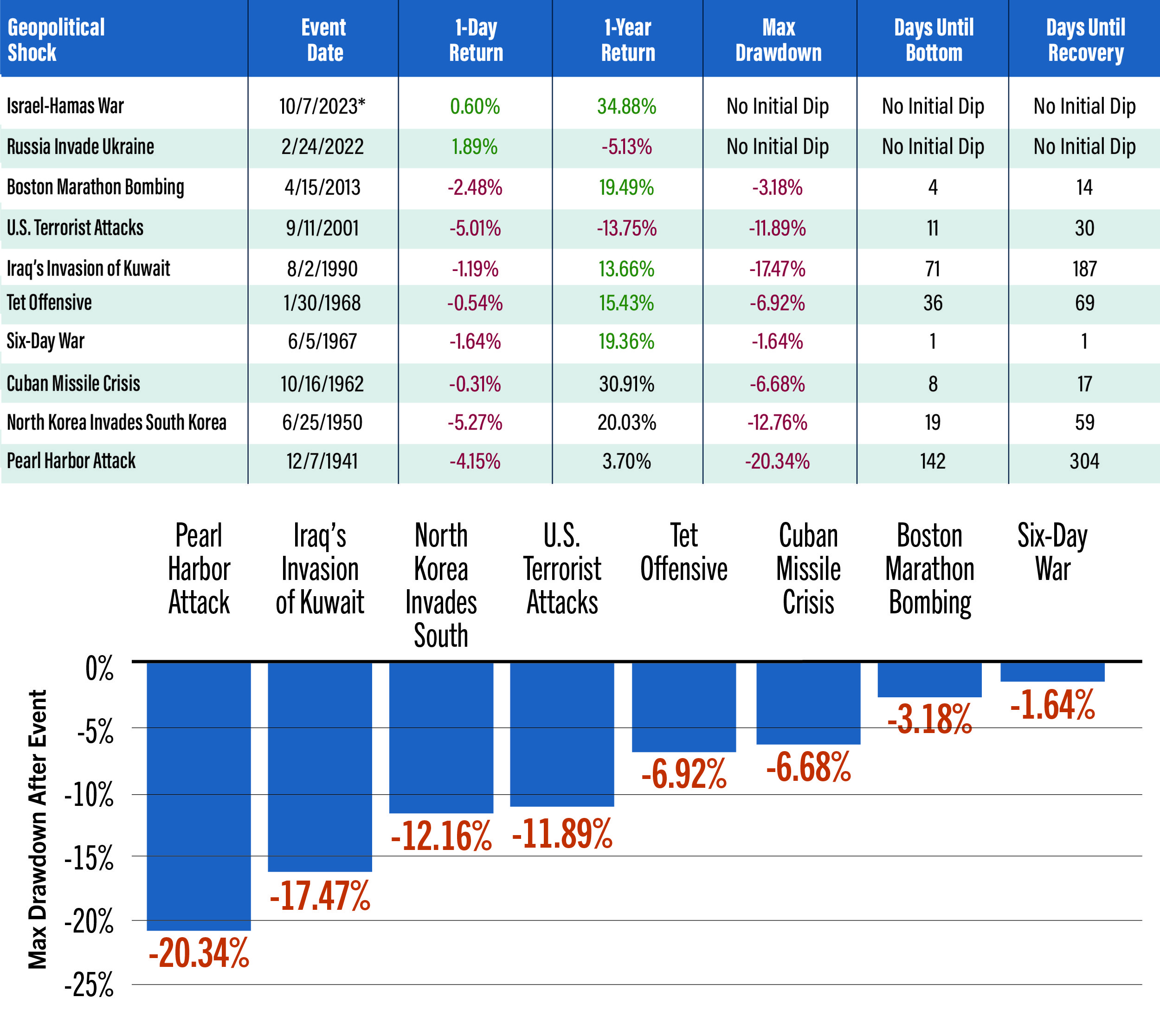
Ultimately, the underlying drivers of long-term investment returns, economic growth, advancements in productivity, and corporate profitability, tend to persist through political cycles and international conflicts. By maintaining exposure to a broad range of assets, portfolios are designed not only to withstand unexpected developments but also to participate in the opportunities that often arise as markets adjust.
Our team continuously reviews portfolio exposures across sectors, asset classes, and regions to ensure they remain consistent with each client’s long-term objectives and risk tolerance.
If you have questions about how these developments may specifically affect your portfolio holdings, please don’t hesitate to reach out to your financial advisor. If you’re not currently working with Fragasso, contact us now.